
WELCOME BONUS 300%
UP TO €2000 + 100
FREE SPINS
UP TO €2000 + 100
FREE SPINS
Home → Roulette
Roulette at Thunderpick
Even Chances 1:1 on 18 Numbers
The standard Even Chance bets, such as Red/Black or Odd/Even, pay out at a strict ratio of 1:1 for wagers placed on the eighteen specific numbers outside the zero slot. This payout structure applies uniformly to all these simple bets across the European and French wheel variants available in the live casino lobby for players seeking balanced risk exposure.
In contrast to the European variant which carries a 2.70% house edge, the American version introduces a double zero that increases the total sectors to thirty-eight, thereby raising the house advantage significantly to 5.26% for identical even chance wagers on those same eighteen numbers.
Consequently, players betting on these options at Thunderpick face a higher long-term cost when selecting the American table format compared to the European or French layouts, as the additional green pocket directly reduces the statistical probability of winning any single spin outcome.
The Five Number Bet on the American wheel covers five sectors including both zeros but pays only 6:1, creating a distinct 7.89% house edge that makes this specific wager mathematically inferior to all other available options on the table.
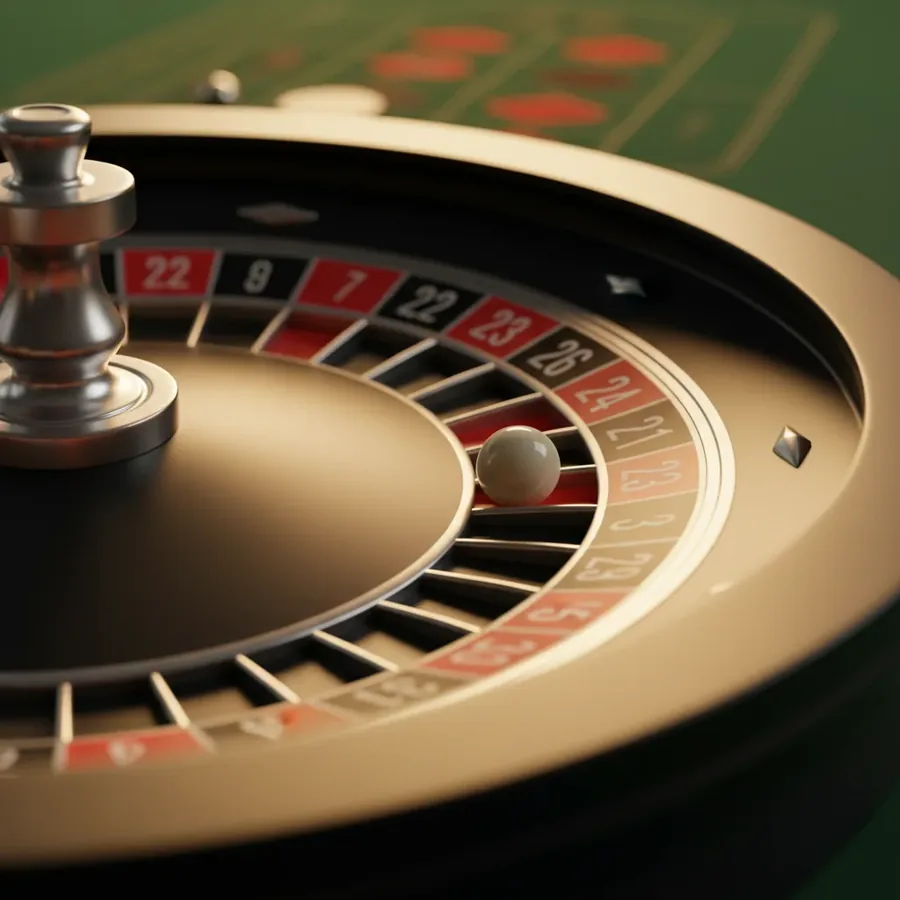
When Does the Lock for Risk Bets Apply?
The game PowerUP Roulette by Pragmatic Play Live introduces a unique mechanic where three to five specific numbers are locked with multipliers ranging up to 15,525x during certain rounds, altering the standard payout dynamics for those selected sectors.
This feature allows players to place bets within the stake range of 0.20 EUR to 2,000 EUR while potentially accessing amplified returns on the locked numbers, provided they understand the RTP remains stable at 97.19% despite the volatility spikes.
Unlike Quantum Roulette Live by Playtech which offers multipliers up to 500x on one to five numbers with stakes from 0.10 EUR to 5,000 EUR, the PowerUP variant caps its maximum potential win at a fixed multiplier threshold per round.
Players must adjust their strategy accordingly because the locked numbers do not guarantee wins, and the high variance associated with these multipliers requires a larger bankroll to withstand potential losing streaks before hitting a significant payout event.
Statistics: 2.70 Percent of Every Bet
European Roulette operates on a wheel with thirty-seven sectors, resulting in a consistent house edge of 2.70% that is applied to every single bet type regardless of whether it is an inside straight or an outside dozen wager.
This mathematical constant means that for every unit wagered over a long period, the theoretical return to player stands at 97.30%, ensuring that the casino retains a predictable percentage of the total handle generated from all active tables.
French Roulette with La Partage improves this statistic for even chance bets by returning fifty percent of the stake when the ball lands on zero, effectively halving the house edge to 1.35% for those specific red/black or odd/even wagers.
However, inner bets in French Roulette without La Partage retain the standard 2.70% edge, meaning players focusing on complex combinations like splits or corners do not benefit from the reduced house advantage available on simpler outside propositions.
How Much Budget Withstands 2.70 Percent House Edge
To withstand the 2.70% house edge inherent in European Roulette, a player should calculate their expected loss per session based on the total turnover, recognizing that the 300% welcome bonus up to 2,000 EUR provides additional playing capital.
Tischspiele contribute only ten percent toward the wagering requirement of the bonus, meaning that every hundred euros wagered on roulette tables counts as ten euros toward unlocking the free spins or bonus funds released to the account.
This low contribution rate necessitates a significantly larger volume of play compared to slots, requiring players to deposit and bet more aggressively to meet the terms attached to the initial promotional offer effectively.
Consequently, managing the budget involves tracking the effective turnover carefully, as the slow progression through the wagering conditions increases the exposure to the 2.70% statistical disadvantage over time until the bonus requirements are fully satisfied.
Minimum and Maximum Bets Limit Every Martingale
PowerUP Roulette from Pragmatic Play Live sets a betting range from 0,20 EUR to 2.000 EUR per spin. This upper limit caps the maximum potential win at 15.525x the stake, strictly defining the table's volatility profile for high rollers. Players using progressive systems must account for this hard ceiling when calculating their bankroll requirements over extended sessions.
The Quantum Roulette variant by Playtech offers a wider betting window of 0,10 EUR up to 5.000 EUR per round. This higher maximum allows for more aggressive stake increases during hot streaks, though the RTP remains fixed at 97.30%. Such limits ensure that no single bet can trigger disproportionate payouts relative to the table's operational constraints.
Standard European Roulette tables typically enforce lower minimums compared to live dealer options, often starting around 1,00 EUR. This accessibility suits conservative players who wish to extend their playtime without risking significant capital per spin. The house edge of 2.70% applies uniformly across all straight-up and outside bets on these standard wheels.
Roulette bet types at a glance
| Bet | Payout | Win Chance | Numbers Covered | House Edge |
|---|---|---|---|---|
| Roulette Französisch, innere Einsätze (La Partage gilt nicht) | Straight 35:1, Split 17:1, Street 11:1, Corner 8:1, Six Line 5:1, Dozen 2:1, Column 2:1 | 97.30% | Rad gleich (37 Sektoren), aber La Partage/En Prison gilt nicht für innere Einsätze – Edge bleibt europäisch | 2.70% |
| Roulette Amerikanisch (doppelte Null, 38 Sektoren) | Straight 35:1, Split 17:1, Street 11:1, Corner 8:1, Six Line 5:1, Dozen 2:1, Column 2:1, Rot/Schwarz 1:1 | 94.74% | 38 Sektoren (1–36 + 0 + 00); Auszahlungen wie beim europäischen Rad, aber der zusätzliche Sektor verdoppelt den Hausvorteil | 5.26% |
| Roulette Amerikanisch – Five Number Bet (0, 00, 1, 2, 3) | Five Number 6:1 (deckt 5 von 38 Sektoren) | 92.11% | Einzige Wette am amerikanischen Rad mit Edge über 5,26% – „Fallenwette“. Kein Äquivalent am europäischen Rad | 7.89% |
| Roulette Europäisch (einfache Null, 37 Sektoren) | Straight 35:1, Split 17:1, Street 11:1, Corner 8:1, Six Line 5:1, Dozen 2:1, Column 2:1, Rot/Schwarz 1:1, Odd/Even 1:1, 1-18/19-36 1:1 | 97.30% | 37 Sektoren (1–36 + 0); Auszahlungen wie für 36 Sektoren – daher konstanter Edge auf ALLE Wetten | 2.70% |
| Roulette Französisch mit La Partage (gerade Chancen) | Rot/Schwarz 1:1 (bei 0 Rückerstattung 50%), Odd/Even 1:1, Low/High 1:1; Innere Einsätze ohne La Partage: Straight 35:1, Split 17:1, Street 11:1, Corner 8:1 | 98.65% | Bei 0 wird die Hälfte des Einsatzes auf gerade Chancen zurückerstattet (Rot/Schwarz, Pair/Impair, Manque/Passe). En Prison gibt denselben 1,35%. Regel gilt NUR für gleiche Einsätze | 1.35% |
Too High a Bet for a 50 EUR Bankroll
A 50 EUR bankroll is insufficient for PowerUP Roulette, where the minimum bet is 0,20 EUR but the variance is extreme. With a max win cap of 15.525x, even small stakes require substantial volatility tolerance that a limited balance cannot sustain. Players should avoid this high-variance game until they have increased their available funds significantly.
Quantum Roulette by Playtech demands a minimum stake of 0,10 EUR, allowing 500 initial spins on a 50 EUR budget. However, the presence of multipliers up to 500x introduces unpredictable swings that can deplete a small bankroll rapidly. The 97.30% RTP does not guarantee short-term stability for players with restricted financial resources.
Traditional American Roulette features a 5.26% house edge, which erodes a 50 EUR bankroll faster than European variants. A single straight bet of 1 EUR risks losing 2% of the total balance immediately upon hitting zero or double zero. This mathematical reality makes small balances highly vulnerable to rapid depletion in high-edge environments.
La Partage Applies Only to Even Chances
French Roulette with La Partage refunds half the stake on even chances like Red/Black if the ball lands on zero. This rule reduces the house edge to just 1.35%, making it one of the most player-friendly variants available online. The mechanism specifically targets outside bets, leaving internal wagers exposed to the full 2.70% disadvantage.
Straight bets inside the grid do not qualify for the La Partage refund, retaining the standard 35:1 payout ratio. Since these wagers cover only one number, the probability of winning is low, and the house edge remains at 2.70%. Players focusing on internal combinations forfeit the protective benefit offered to even chance participants.
En Prison operates similarly to La Partage for even money bets, freezing the stake for the next round instead of refunding it immediately. Both rules apply exclusively to outside bets, ensuring that corner or street bets remain unaffected by these favorable conditions. This distinction forces players to choose between safety on outside bets and higher risk on internal positions.
Step-by-Step to Your First Straight Bet
A straight bet covers a single number on the roulette wheel, offering the highest possible payout of 35:1. To place this wager, select a specific chip value and click directly on the desired number within the betting grid. This action locks the stake onto that individual sector, excluding all adjacent numbers from the current round.
If the ball lands exactly on the chosen number, the casino credits the account with thirty-five times the original stake plus the returned bet. For example, a 1 EUR wager yields 36 EUR in total returns, netting a profit of 35 EUR. This outcome provides immediate compensation for the low probability associated with hitting a single digit.
Conversely, if the ball settles on any other 36 sectors, the entire stake is lost to the house. The 2.70% house edge ensures that long-term losses accumulate despite occasional wins. Players must understand that this high-risk strategy requires careful bankroll management to survive inevitable losing streaks.
Distribute 500 Euro Bankroll at the Lightning Table
Allocating 500 EUR to Quantum Roulette by Playtech allows for approximately 5,000 spins at the minimum 0,10 EUR stake. The game features quantum multipliers up to 500x on random numbers, creating opportunities for significant gains from small base bets. This distribution balances longevity with the potential for multiplier-triggered windfalls during active rounds.
PowerUP Roulette from Pragmatic Play Live offers a different experience with its power-up numbers and up to 15.525x max win. Starting with 500 EUR permits roughly 2,500 spins at the 0,20 EUR minimum, providing ample time to observe multiplier patterns. The 97.19% RTP suggests slightly better theoretical returns compared to standard European wheels.
American Roulette variants carry a 5.26% house edge, requiring larger bankrolls to maintain similar session durations. A 500 EUR fund would yield fewer profitable cycles due to the double zero increasing the casino's advantage. Players seeking longer entertainment periods should prefer European or French tables with lower edges for optimal bankroll efficiency.
Calculate Payout: Corner 8:1 Plus Bet
The Corner bet pays out at odds of 8:1 for a wager placed on four adjacent numbers. This payout ratio is consistent with the Split bet which offers 17:1 and the Street bet providing 11:1 returns. A successful 10 unit wager yields an 80 unit profit, demonstrating the fixed nature of these inside bets. The Straight bet offers the highest standard return at 35:1 for single number selections.
This specific payout structure applies to the European wheel variant featuring 37 sectors including a single zero. The house edge remains constant at 2.70% across all these betting options due to the identical payout ratios. Players must account for this edge when calculating expected returns over multiple spins. The American wheel variant doubles the house edge to 5.26% despite maintaining the same 8:1 corner payout.
Wagering contributions for table games count toward bonus turnover requirements at a rate of only 10%. This means that every 100 units wagered on a corner bet contributes just 10 units to the required volume. The welcome bonus terms allow for up to €2,000 in matched funds plus free spins. Players should verify their contribution percentage before placing significant wagers on high-edge variants.
Latency and Betting Window in Live Stream
PowerUP Roulette by Pragmatic Play Live allows bets ranging from 0.20 EUR to 2,000 EUR per round. This live dealer game features a unique mechanic where three to five PowerUP numbers are selected. The maximum potential win cap is set at 15,525 times the initial stake amount. These limits define the financial scope for participants engaging with this specific title.
Quantum Roulette Live by Playtech operates within a wider betting window of 0.10 EUR to 5,000 EUR. Multipliers up to 500x can be applied to one to five random numbers during gameplay. The base RTP for this game stands at 97.30%, matching the standard European wheel configuration. Higher stakes enable larger absolute payouts when multipliers trigger on winning selections.
Betting windows close shortly before the wheel spin begins, requiring rapid decision-making from players. The latency in live streams ensures real-time interaction but demands precise timing for placement. Standard roulette bets like Straight or Split maintain their traditional 35:1 and 17:1 payouts. Players must adapt to the faster pace compared to digital RNG versions of the game.
D'Alembert and Fibonacci Against the Same Table Limit
The minimum stake for PowerUP Roulette is set at 0.20 EUR, accommodating conservative progression strategies. Players using the D'Alembert system might increase wagers incrementally after losses within this low threshold. Maximum bets reach 2,000 EUR, allowing substantial recovery attempts if bankroll permits sufficient growth. This wide range supports both novice players and those employing complex mathematical betting models effectively.
Fibonacci sequence betting aligns well with Quantum Roulette Live limits starting at 0.10 EUR. The progressive nature of Fibonacci requires careful tracking of previous outcomes to function correctly. With a max win cap potentially reaching 500x multipliers, large wins offset gradual stake increases. The 5,000 EUR upper limit provides ample room for advanced progression systems without hitting table restrictions immediately.
Both systems face the same underlying house edge of 2.70% on European-style wheels used in these titles. Wagering requirements for bonuses apply at a 10% contribution rate for all table game activity. Progression strategies cannot overcome the mathematical disadvantage inherent in the casino's advantage. Players should monitor their total turnover against the bonus terms to avoid forfeiture of funds.
Multipliers up to 500x Lower the Base Payout
Quantum Roulette introduces multipliers up to 500x on straight bets, significantly altering expected value calculations. While the base payout remains at 35:1 for successful single number selections, multipliers enhance winning rounds. The presence of these multipliers affects the overall RTP, which stays at 97.30% for this variant. Players must understand that not every spin will feature enhanced multiplier opportunities on winning numbers.
The standard European wheel offers a consistent house edge of 2.70% regardless of multiplier presence. Without multipliers, payouts follow traditional ratios such as 17:1 for splits and 11:1 for streets. The addition of quantum features creates volatility spikes that deviate from standard statistical expectations. Winners relying solely on base payouts may find returns lower than anticipated during non-multiplier rounds.
Bonus wagering contributions remain unaffected by the introduction of quantum multipliers in live streams. All bets placed on Quantum Roulette contribute 10% toward meeting the rollover requirements. The welcome bonus offers up to €2,000 plus free spins for new account registrations. Strategic play involves balancing high-risk multiplier hunts with steady base payout accumulation for compliance.
What Straight, Split, and Street Practically Mean
A Straight bet covers exactly one number on the wheel and pays out at 35:1 odds. This highest-paying inside bet carries the same risk profile as other single-number wagers. On the European wheel with 37 sectors, the probability of winning is approximately 2.70%. Players seeking frequent small wins often prefer outside bets over these high-variance straight options.
Split bets cover two adjacent numbers and offer a payout ratio of 17:1 upon success. This option doubles the coverage area compared to a straight wager while halving the return. The house edge remains constant at 2.70% for European wheels regardless of the bet type. Strategic players utilize split bets to balance coverage and potential returns during active sessions.
Street bets encompass three consecutive numbers in a row and provide an 11:1 payout multiplier. This format increases coverage to three sectors while maintaining reasonable profitability for the participant. The corner bet covering four numbers pays 8:1, further expanding coverage with reduced odds. Understanding these distinctions helps players select bets aligned with their risk tolerance and bankroll size.
Contact
Live - online chat
Banking









Providers












Thunderpick Casino 2026